






Highlights:
- Pudgy Penguins projected its animated characters on the Las Vegas Sphere over Christmas, promoting its brand during a challenging year for NFTs.
- Once an NFT project, Pudgy Penguins successfully ventured into the physical toy market, aiming for an estimated revenue of $50 million by year-end.
- Despite a downturn in the overall NFT market, certain projects like Pudgy Penguins and the rise of collectible backed NFTs have shown resilience.
The Rising Star of Pudgy Penguins
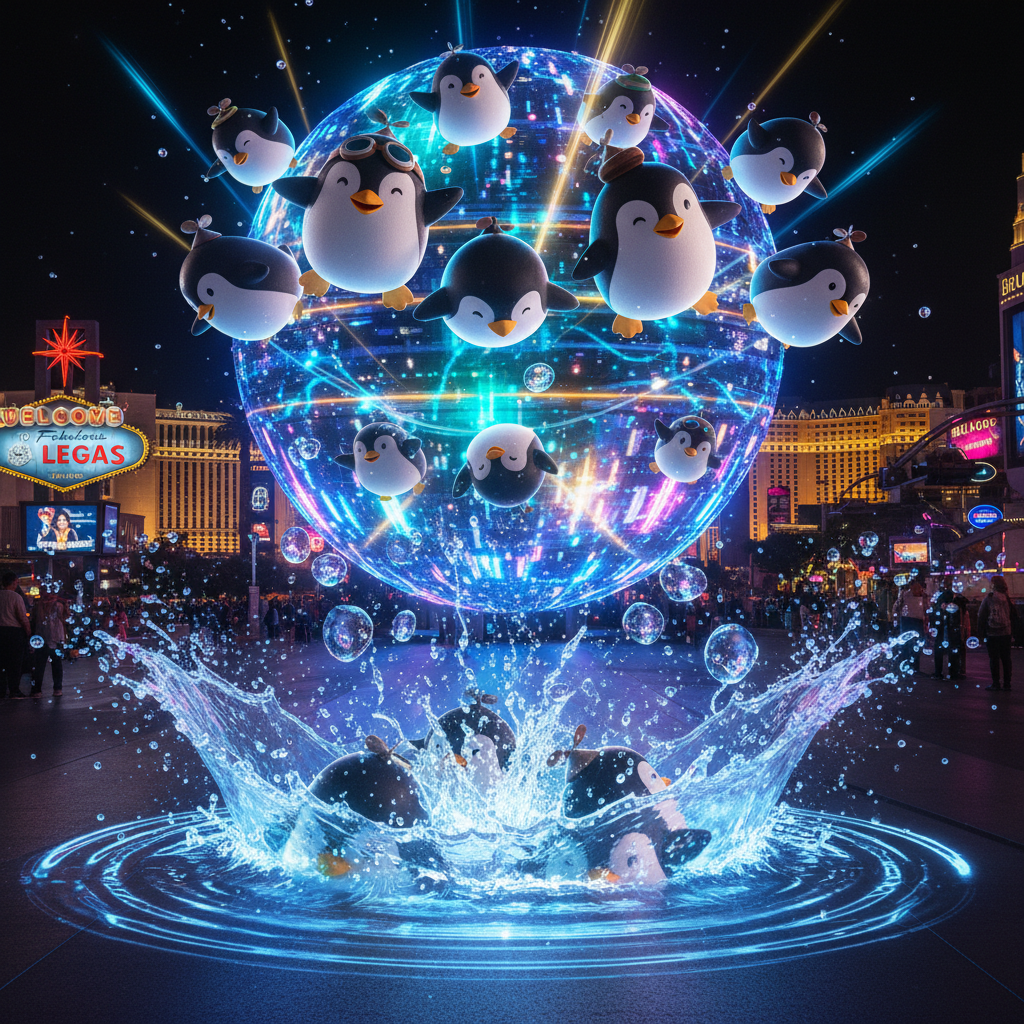
In a remarkable display of creativity and innovation, Pudgy Penguins branded itself across the iconic Las Vegas Sphere during the Christmas week. Known for its charming animated characters, the project took its nifty penguins from the digital space to a prominent physical venue, capturing the attention of visitors along the bustling Las Vegas Strip. This dazzling projection, which went live on Christmas Eve, is not just a festive ornamentation; it signifies the brand’s commitment to increasing visibility and engagement in a rapidly shifting market landscape.
Pudgy Penguins, originally an NFT initiative founded in 2021, underwent a dramatic transformation when entrepreneur Luca Netz acquired it for $2.5 million in Ether. Recognizing the declining revenues in the NFT arena, Netz leveraged his consumer products background to pivot the project towards tangible toy production. This strategic shift aimed not only to weather market uncertainties but to establish a more sustainable revenue stream, emphasizing the importance of adaptability in the constantly evolving world of digital collectibles.
Exploring the Core of the Transformation
The move from virtual characters to physical products was not merely a short-term fix; it evolved into a strategic cornerstone for Pudgy Penguins. Despite the NFT market experiencing a sharp decline in sales—transaction volumes dropped by 63% year-over-year to $1.5 billion in early 2025—Pudgy Penguins emerged relatively unscathed and is on track to end the year with impressive revenue estimates. As of late December, it’s projected that Pudgy Penguins will generate approximately $50 million by broadening its market presence.
Further bolstering its brand visibility, Pudgy Penguins has cultivated a robust following on social media, particularly on platforms like Instagram, where its account boasts around 2 million followers. This digital strategy not only enhances community engagement but also serves as a vital marketing tool in a landscape where traditional NFT sales have faltered. Interestingly, even as the NFT market capitalization dwindled to about $2.5 billion in December, Pudgy Penguins and similar projects successfully managed to carve their niche.
Implications and Future Directions
The implications of Pudgy Penguins’ strategy highlight a significant trend in the NFT industry: the blending of digital assets with tangible products can create new value propositions. As consumers increasingly seek utility and engagement from their collectibles, projects that expand beyond digital spheres may find more sustainable success. This approach is particularly relevant given the recent downturn, where some NFT segments have struggled, yet others, like real-world collectible-backed NFTs, continue to thrive.
As the NFT landscape evolves, the success observed by Pudgy Penguins may serve as a template for future projects aiming for sustainability. By focusing on community building, embracing cross-industry collaboration, and innovatively merging products, the brand illustrates that adaptability could very well be the key to longevity amidst market volatility. How will other NFT projects respond to this evolving marketplace? Can the trends set by Pudgy Penguins inspire even broader industry transformations?
In conclusion, Pudgy Penguins exemplifies a successful transition from digital collectibles to a thriving consumer brand. Its journey underscores the importance of innovation and adaptability in a fluctuating market. As we ponder the future, what strategies should other NFT projects consider to ensure they remain relevant? How might the growing trend of tangible products alter the landscape of digital collectibles?
Editorial content by Riley Parker
