






Highlights
- PEI Licensing sues Pudgy Penguins over alleged trademark infringement and dilution.
- The lawsuit claims Pudgy Penguins’ branding creates confusion with PEI’s established trademarks.
- Pudgy Penguins maintains that their brand is distinct and engaged in talks with PEI before the lawsuit.
Introduction to the Dispute
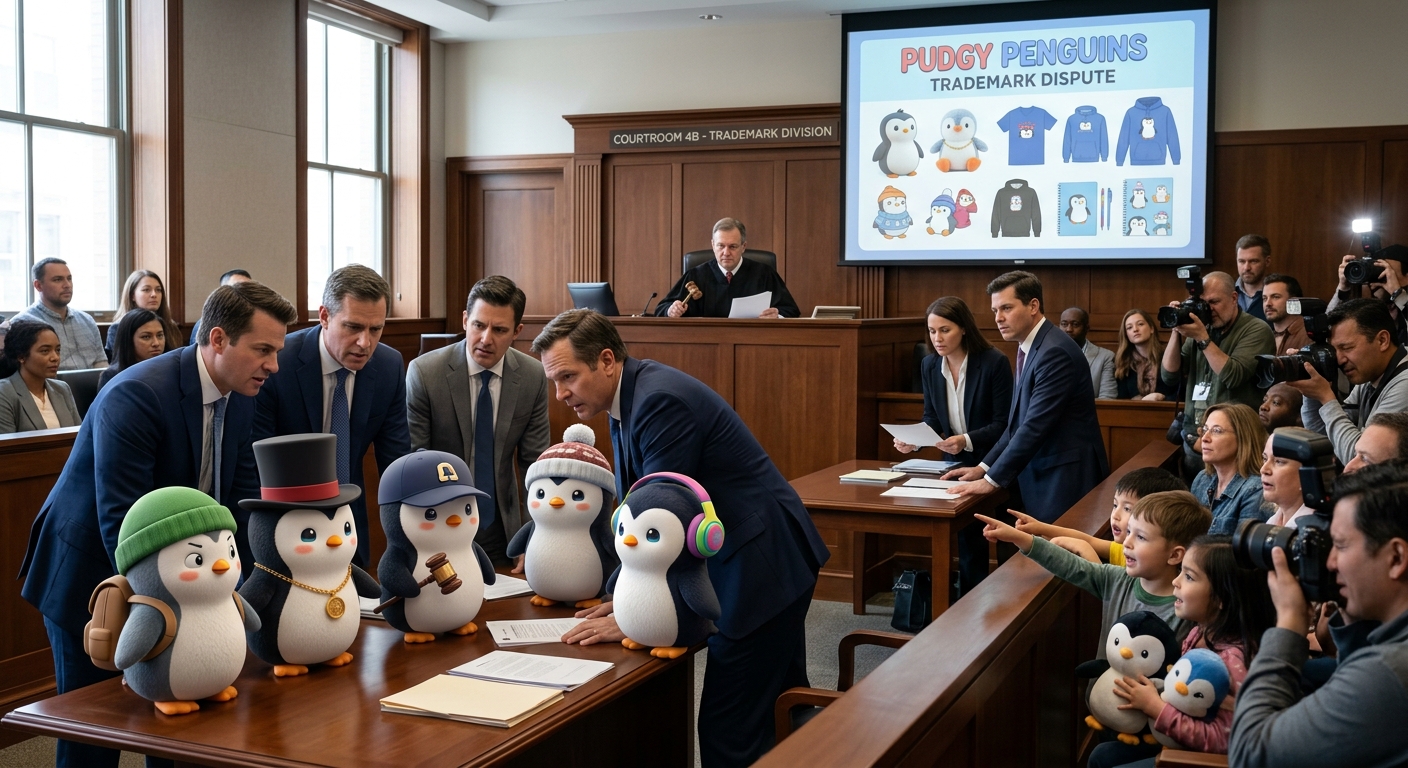
Recently, PEI Licensing, the parent company of the well-known clothing brand Original Penguin, initiated a lawsuit against the nonfungible token project, Pudgy Penguins. This legal battle centers around accusations of trademark infringement, dilution, and unfair competition. PEI contends that the branding and merchandise associated with Pudgy Penguins bear a striking resemblance to its own established trademarks, prompting the lawsuit filed in a Florida federal court on Wednesday.
The significance of this case extends beyond mere trademark disputes; it reflects the broader implications of branding in an increasingly digital and NFT-centric marketplace. As the intersection of traditional retail and digital assets blurs, such conflicts may reshape not only legal standards for trademark protection but also business strategies for brands navigating these new territories.
Core Arguments of the Litigation
In the legal complaint, PEI asserts that it has been using the “PENGUIN” word mark since 1967 and introduced a penguin design on its apparel as far back as 1956. Their lawsuit emphasizes that the Pudgy Penguins brand engages in the unauthorized use of similar trademarks, which PEI argues is likely to confuse consumers and dilute the goodwill associated with its established marks. The complaint specifies that the Pudgy Penguins’ trademark applications lead to a misappropriation of PEI’s valuable property rights.
Contributing to the tensions, PEI sent a cease and desist letter to Pudgy Penguins in October 2023. This letter demanded that the NFT project abandon its trademark applications, which PEI claims infringe on its famous branding. The lawsuit seeks a court order to compel the US Patent and Trademark Office to reject Pudgy Penguins’ applications and demands the destruction of products that may confuse consumers. Moreover, PEI is asking for restitution of profits from any infringing sales.
Implications and Responses
As the lawsuit unfolds, the implications for both parties could be significant. In her response, Pudgy Penguins’ chief legal officer, Jennifer McGlone, expressed surprise at the lawsuit, noting that both entities were engaged in what they considered “productive discussions” to resolve the situation amicably. McGlone emphasized their confidence that their trademarks are visually distinct and cater to different consumer bases, arguing that PEI’s claims are unfounded.
The legal proceedings will likely spotlight the crucial relationship between established brands and emerging digital projects in the NFT space. If Pudgy Penguins prevails, the case could establish a precedent supporting new digital entities against traditional brands. Conversely, if PEI wins, it may reinforce rigorous enforcement of trademark rights amidst the rapid evolution of commerce in the digital age. With Pudgy Penguins already asserting its distinctiveness through secured trademark approvals, the outcome of this case may reverberate far beyond these two companies.
Conclusion
In summary, the lawsuit filed by PEI Licensing against Pudgy Penguins underscores a critical inflection point as traditional trademarks collide with the burgeoning NFT market. As this legal battle progresses, the implications for brand protection and the future of digital trademarks remain pivotal topics for discussion. What do you think the outcome of this case could mean for other emerging brands in the NFT space? Can distinct branding in new markets successfully coexist with established trademarks? How might this case influence future legal frameworks around digital assets?
Editorial content by Riley Parker
