





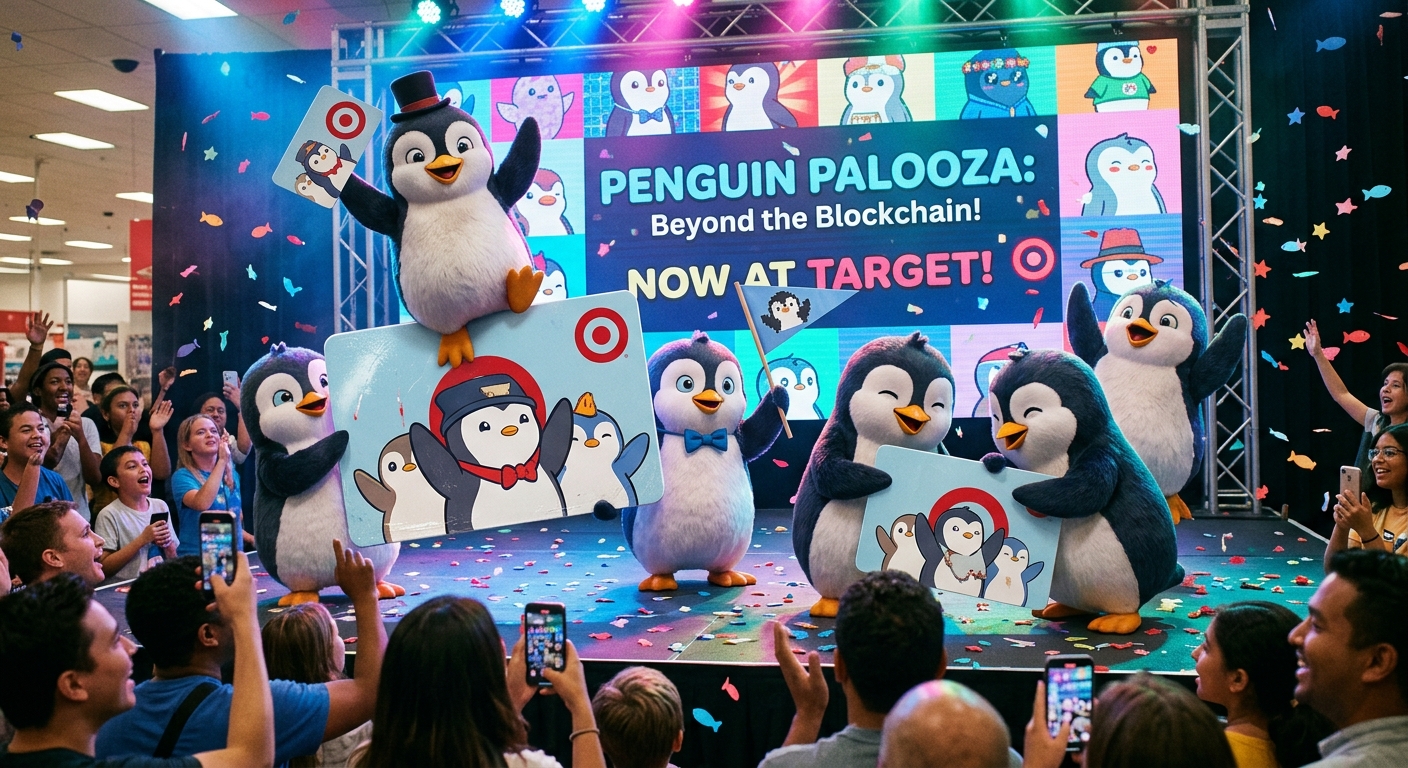

- Non-fungible token project Pudgy Penguins has launched its trading card game nationwide at Target stores in the US.
- The debut of Vibes Series 3 represents the most significant retail expansion to date, circulating a total of 15 million cards.
- Pudgy Penguins aims to grow beyond digital assets, exploring avenues like toys, gaming, and consumer products.
Introduction to Pudgy Penguins’ Retail Expansion
The Pudgy Penguins project, known for its vibrant community of non-fungible token (NFT) enthusiasts, is making waves in the retail sector with the nationwide rollout of its trading card game, Vibes Series 3, at Target stores across the United States. This development is significant as it marks the project’s largest venture into physical retail, allowing fans of the digital collectibles to engage with the brand in a tangible way. With a total of 15 million cards now in circulation, this launch not only expands their product offerings but also positions Pudgy Penguins as a notable player in a competitive market.
This strategic move to retail illustrates the potential for NFT projects to transcend their digital roots and venture into mainstream consumer products. By incorporating original artwork and gameplay innovations, Pudgy Penguins continues to attract both existing fans and new customers, setting the stage for a broader entertainment franchise rooted in their unique intellectual property.
Diving Deeper into the Pudgy Penguins Brand
Pudgy Penguins has spent years transforming its Ethereum-based NFT collection into a multifaceted consumer brand, with a product line that now includes toys and various merchandise. In 2023 alone, the physical toys made their way into over 2,000 Walmart stores, reflecting the project’s commitment to expanding its market presence. CEO Luca Netz shared that more than one million toys were sold in the previous year, indicating robust demand among consumers and validating the business model of translating digital assets into physical products.
The licensing framework implemented by Pudgy Penguins also benefits NFT holders by allowing them to receive a share of the net revenue—5%—from products featuring their specific penguins. This innovative approach fosters a sense of community ownership among collectors and encourages further engagement with the brand. Additionally, as gaming becomes an increasingly popular channel, Pudgy Penguins has launched various games, including their latest browser-based game, Pudgy World, indicating an evolving strategy that embraces technology and community interactivity.
The Future of Pudgy Penguins and Its Implications
The retail expansion and diversification of the Pudgy Penguins brand underscore the potential impact that NFT projects can have on traditional industries. As Pudgy Penguins continues to build its brand beyond just digital collectibles, it sets a precedent for other projects to explore similar paths, merging digital and physical marketplaces. This move could inspire a wave of collaborations and innovations within the realm of gaming, consumer goods, and entertainment, ultimately reshaping how audiences interact with NFT-based properties.
Moreover, the halting of development on the mobile game Pudgy Party to prioritize resources on browser gaming reflects a deliberate strategy to refine their offerings and adapt to market demands. The dedication to evolving their gaming experiences demonstrates a long-term vision, highlighting the importance of engaging users in diverse formats. As the Pudgy Penguins franchise grows, it poses fascinating questions about sustainability, consumer retention, and the future of brand loyalty in a blockchain-driven world.
Editorial content by Harper Smith
