






Highlights
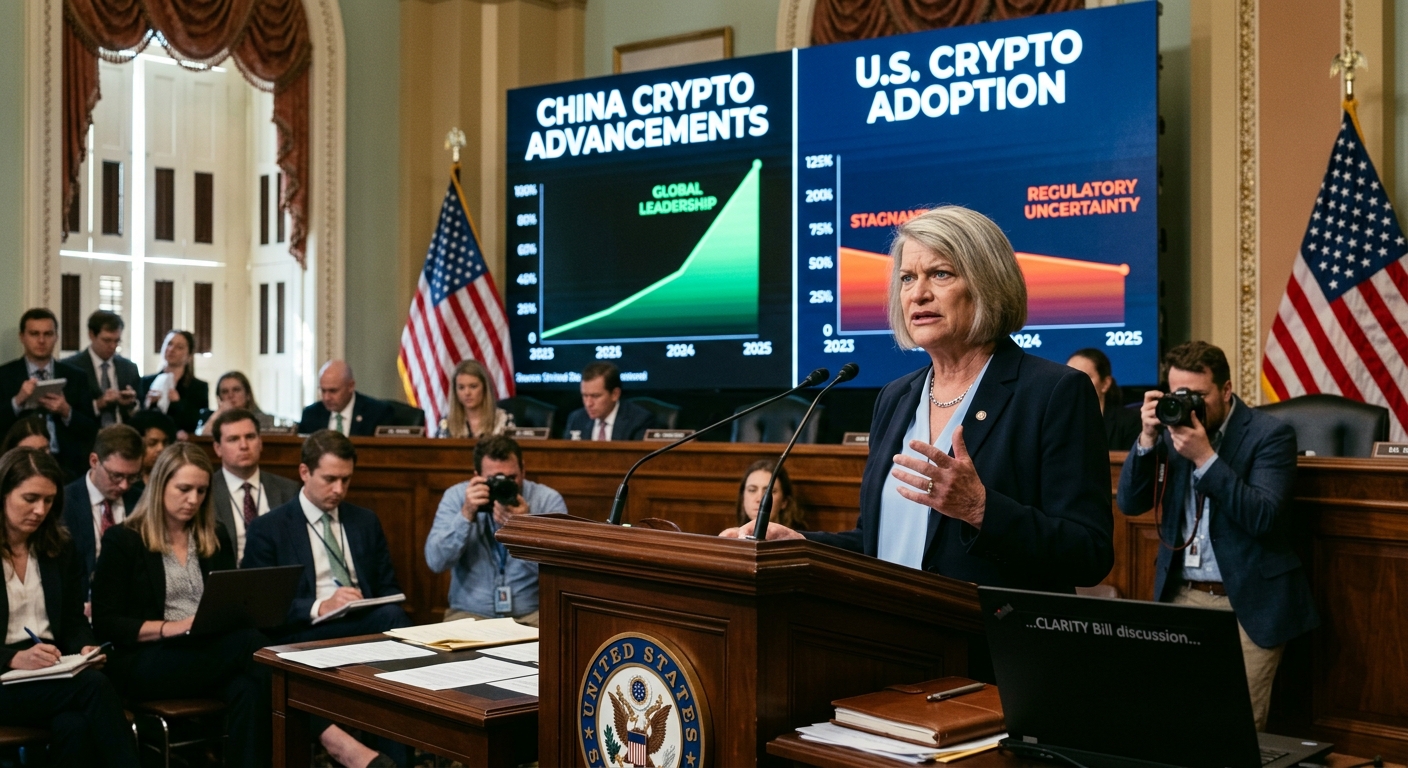
- Wyoming Senator Cynthia Lummis warns that the U.S. risks losing its crypto leadership to countries like China if the Digital Asset Market Clarity Act is not passed.
- JPMorgan CEO Jamie Dimon has voiced strong opposition to the current version of the CLARITY Act, citing regulatory concerns related to anti-money laundering and capital reserves.
- The window for passing the CLARITY Act is closing rapidly, with potential delays pushing any legislative action into 2030 or beyond.
Background and Significance of the CLARITY Act
The landscape of cryptocurrency regulation in the United States is becoming increasingly urgent as lawmakers scramble to establish a comprehensive framework. Senator Cynthia Lummis from Wyoming emphasizes the critical need for the Digital Asset Market Clarity Act (CLARITY) to be passed. She cautions that without decisive action, the U.S. risks surrendering its leading position in the cryptocurrency sector to countries like China, which could set the rules for the financial systems of the future.
Lummis believes that the CLARITY Act could lay the groundwork for a regulatory framework that will support innovation while ensuring global standards. She argues that America’s historical influence in establishing a dollar-driven financial system has contributed to global stability for decades. Therefore, timely action on this legislation is essential not just for the U.S. but for the integrity of global finance going forward.
Challenges and Oppositions in the Legislative Process
As the CLARITY Act makes its way through legislative hurdles, significant opposition arises from the banking sector. Notably, JPMorgan CEO Jamie Dimon has publicly stated that banks will oppose the bill unless it incorporates stricter anti-money laundering (AML) measures and aligns crypto companies more closely with traditional banking regulations. Dimon has pointed out perceived discrepancies, indicating that crypto firms would benefit unfairly from not having the same rigorous requirements that banks are subject to.
This contentious backdrop poses a significant threat to the passage of the bill, especially with the U.S. midterm elections approaching. The urgency among lawmakers and industry advocates is palpable, as failing to secure legislative approval by 2026 could delay any further attempts until 2030. Lummis’s warnings suggest that this timeframe could see the U.S. fall behind as other nations move forward in crafting their own frameworks.
Future Implications and the Path Forward
The implications of the CLARITY Act extend far beyond the borders of the United States. Should it successfully pass, it could establish a comprehensive framework that balances innovation with necessary regulation, securing America’s foothold in the global crypto marketplace. Conversely, failure to act may lead to missed opportunities, allowing countries like China to gain a competitive edge by crafting their own regulatory environments.
Advocates for the CLARITY Act call for unity among lawmakers, emphasizing that the future of digital finance hinges on constructive collaboration rather than opposition. As the September deadline looms, stakeholders will need to come to the negotiation table to find common ground that addresses the concerns of the banking sector while also fostering an environment conducive for crypto innovation.
In conclusion, the urgency surrounding the CLARITY Act reflects the pivotal crossroads in cryptocurrency regulation. Are lawmakers prepared to act swiftly enough to safeguard the United States’ position in the evolving global financial landscape? What compromises might emerge to resolve the stark opposition from banking leaders? And if the act fails, how might the crypto landscape shift in the coming years?
Editorial content by Finley Adams
