Summary
Transform Your Space: Easy Tips for a Clutter-Free Home provides essential strategies and insights for anyone looking to achieve a tidy and harmonious living space. Clutter often arises from emotional attachments and disorganized habits, leading to both physical disorder and mental stress. This resource offers actionable steps to directly address clutter, focusing not only on cleaning but also on understanding the emotional and psychological factors that contribute to accumulation.
The article outlines the SPACE framework—Sort, Purge, Assign, Containerize, Equalize—as a methodical approach for breaking down decluttering tasks. It also discusses popular philosophies like the KonMari method and minimalism, encouraging intentional decision-making regarding possessions. Practical advice is shared for specific areas of the home, along with habits that help sustain organization over time.
It recognizes that psychological resistance, such as emotional ties to items, can complicate the decluttering process, and advocates for professional support when necessary. The benefits of a clutter-free home include both increased physical space and enhanced mental well-being, making the pursuit of organization worthwhile.
Finally, the article addresses common challenges like procrastination and decision fatigue, providing strategies for gradual progress, realistic goal-setting, and building a support system. By merging practical organization techniques with psychological awareness, this guide serves as a valuable tool for transforming any home into a serene and functional environment.
Understanding Clutter
Clutter goes beyond mere disorganization; it often has deep emotional and psychological roots. Many individuals hold onto items due to sentimental value, making it difficult to declutter effectively. Additionally, clutter can represent unfinished tasks that contribute to visual distraction and mental stress, negatively impacting both productivity and emotional health.
The accumulation of clutter typically stems from having more possessions than can be organized. Once clutter takes hold, it tends to breed more clutter, underscoring the necessity of maintaining an organized system. Moreover, perceptions of clutter vary; what may seem chaotic to one might be regarded as organized to another. Understanding this subjective nature can help motivate decluttering efforts.
Planning Your Space Transformation
A successful decluttering process begins with a solid plan that breaks tasks into manageable segments. Focus on small areas first—like a drawer or a countertop—to avoid feeling overwhelmed. This step-by-step approach helps build momentum and fosters progress.
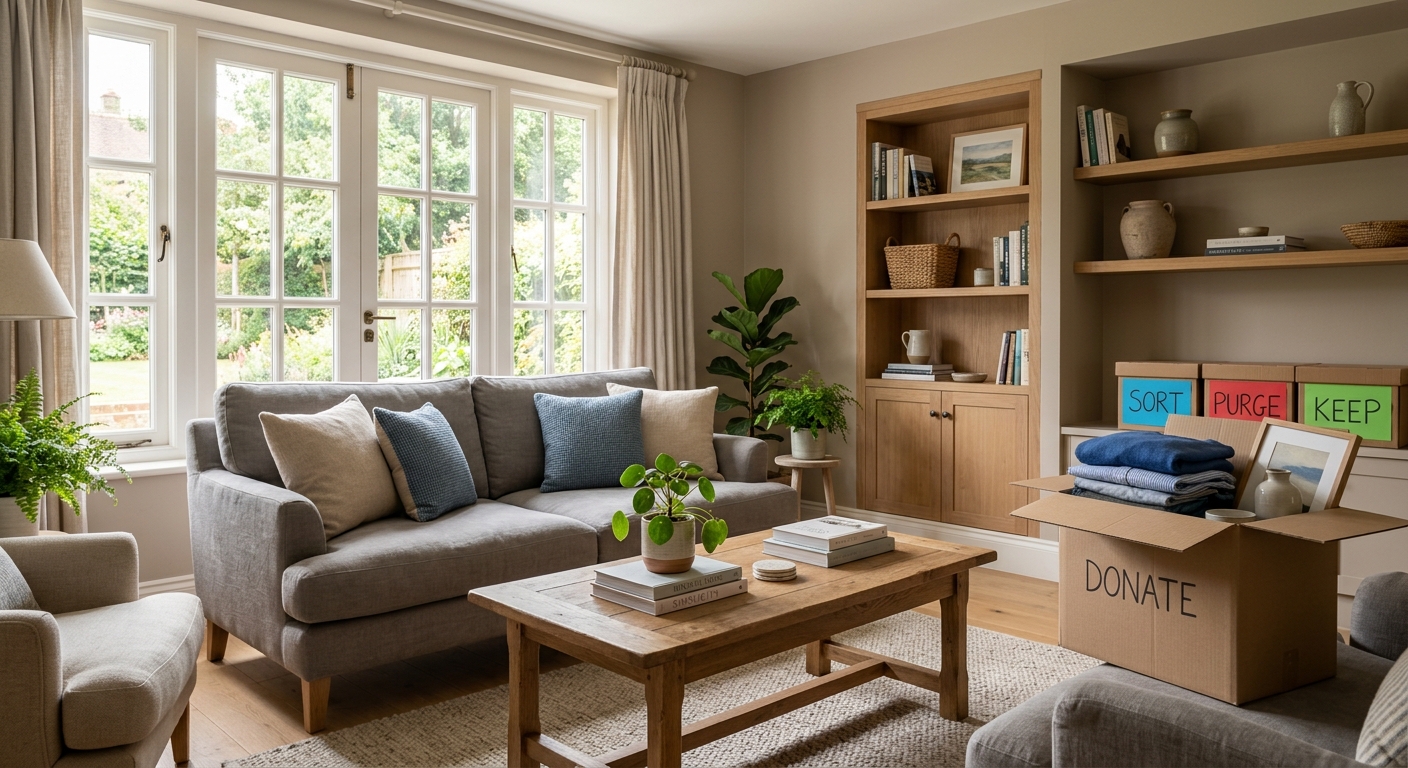
Utilizing the SPACE acronym can streamline this process: Sort through items, Purge the unnecessary, Assign specific spaces for belongings, Containerize to keep things organized, and Equalize to maintain order over time. Defining the purpose for each area also helps prevent future clutter accumulation by guiding what items should be kept.
Creating a prioritization checklist can facilitate more efficient transformations, especially when focusing on the most cluttered zones in your home. By consistently addressing these common clutter hotspots, you’ll not only create a tidier environment but also enhance your mental well-being and productivity. Ultimately, starting from a place of minimal possessions simplifies ongoing organization and maintenance.
Practical Tips for Decluttering
Decluttering can be daunting, but practical strategies can simplify the process. One effective method is to break the task into smaller actions rather than attempting to tackle everything at once. For example, the Core 4 Decluttering Method involves completely clearing an area to start fresh and is flexible enough for any space, from a drawer to an entire room.
Focusing on one category of items at a time, such as clothing or books, over an extended period can reduce burnout and promote thoughtful decision-making. Daily habits, like putting items away immediately or making your bed, can prevent clutter from accumulating. Addressing emotional attachments thoughtfully is also crucial, as understanding the psychological roots of attachment can ease decision-making when letting go of items.
Each area of the home may require tailored strategies—entryways may benefit from vertical storage, living rooms from surface clearing, and garages from functional organization. Consistency in applying these strategies can significantly enhance your living environment, creating a calmer and more organized space.
Organizing Techniques and Tools
Effective organizing hinges on thorough decluttering. Gathering all items from a specific category helps determine what’s necessary and what can be discarded, which simplifies decision-making. Various methods, including SPACE, Danshari, and the KonMari method, offer distinct approaches for maintaining order in your home.
Central to these methods is assigning a specific place for every cherished item, which promotes ease in organization and retrieval. Incorporating personalized storage solutions, such as labeled cubbies in shared spaces, can enhance functionality, especially in family environments. Moreover, maintaining clear surfaces contributes significantly to a space’s tidiness.
Long-term organization also relies on forming consistent daily habits. Implementing simple tools and strategies, like decorative baskets or designated trays, can streamline organization and minimize the stress of misplacing items. Practicing mindful consumption further helps avoid unnecessary accumulation, addressing clutter at its source.
Decluttering Methods and Philosophies
Various decluttering methods exist to assist individuals in reducing clutter effectively. One well-known method is the Core 4 Decluttering Method, which emphasizes a straightforward four-step process to facilitate easy decluttering. Another popular framework is the SPACE Method, which provides guidelines for sorting, purging, and maintaining organization tailored to individual lifestyles.
The KonMari Method encourages decluttering by category and focuses on retaining only items that “spark joy,” promoting a more mindful approach to living. Embracing these philosophies not only aids in creating an organized home but also fosters a lifestyle prioritizing personal well-being.
Psychological and Lifestyle Considerations
Adopting a minimalist lifestyle often stems from a desire for autonomy and mental clarity, as individuals seek to alleviate the burdens imposed by clutter. This shift aligns one’s living space with their personal values, fostering a greater sense of control. Conversely, clutter linked to hoarding can severely affect mental health and necessitate professional intervention.
The psychological benefits of minimalism extend beyond physical space, promoting mindful spending and cultivating emotional stability. Reframing emotional attachments to items as opportunities for redistribution can ease the process of letting go, while techniques like photo documentation capture memories without retaining physical objects. Consistent efforts and habits can help sustain a clutter-free environment, particularly when emotional attachments create challenges.
Benefits of a Clutter-Free Home
A clutter-free environment provides immediate physical space and contributes to enhanced mental well-being. By keeping only cherished items, the home feels more open and manageable, allowing residents to navigate their spaces more easily. This reduction in possessions also translates into less time spent on organization and maintenance, offering opportunities for enjoyment rather than effort.
Beyond spatial improvements, decluttering promotes a sense of tranquility and reduces stress, improving personal relationships by alleviating tensions tied to clutter. Emotional attachments to items can complicate this process, making it important to address these ties, sometimes with professional guidance. Ultimately, living in an organized space enhances cognitive clarity, lowers daily frustrations, and fosters overall well-being.
Challenges and How to Overcome Them
Decluttering presents challenges, especially when sentimental items complicate decisions. Understanding the value and purpose of each item during the process can help avoid future accumulation of unwanted possessions. Initiating decluttering with small, manageable projects fosters motivation through quick wins, making it easier to tackle more daunting spaces later.
Establishing consistency through daily habits can combat feelings of being overwhelmed, while small routines promote gradual progress. For those finding it hard to part with items, considering a delayed decision by placing them in a box until a later date may reduce immediate pressure. Seeking the guidance of professional organizers can also provide the necessary support for those dealing with emotional difficulties during decluttering.