





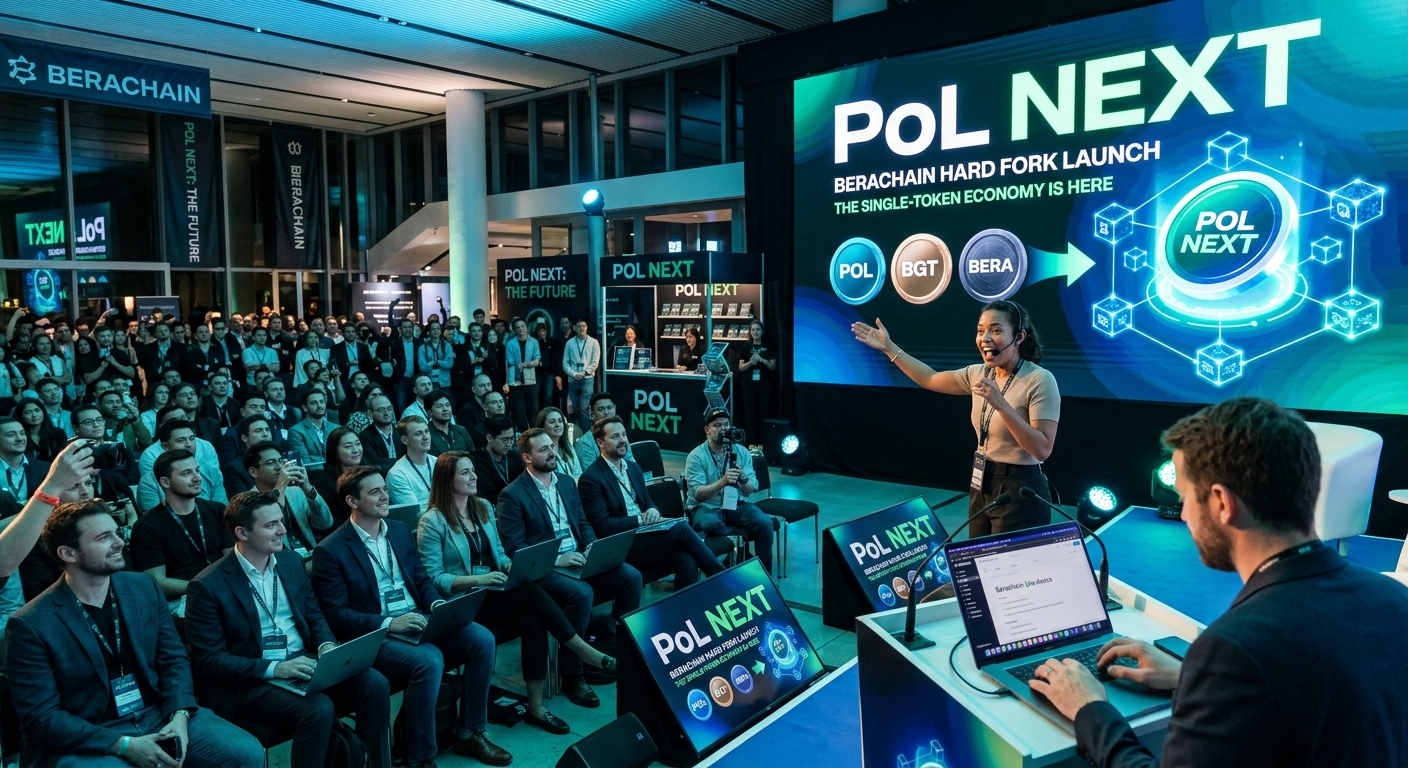

Highlights
- Berachain is shifting from a dual-token model to a single-token incentive system with the BERA token, effective Wednesday at 4 pm UTC.
- The Berachain Foundation anticipates that the new system could potentially triple annual percentage rates (APR) but cautions on potential fluctuations post-upgrade.
- Currently, BERA has faced a significant decline of 88% over the past year, raising questions about network performance and user engagement.
Understanding Berachain’s Shift in Token Dynamics
In a significant move aimed at streamlining its operations, Berachain is set to implement a hard fork that will replace its existing dual-token incentive structure with a focus solely on its primary BERA token. The upgrade is scheduled for Wednesday at 4 pm UTC, and it will effectively cease emissions of the Bera Governance Token (BGT), transitioning the network’s rewarding mechanisms to Wrapped BERA (WBERA). This change comes at a crucial time, reflecting Berachain’s desire to simplify its operations amidst fluctuating market conditions.
The significance of this upgrade cannot be understated. By transitioning to a single token model, Berachain aims to provide a more coherent and straightforward experience for users. Gone will be the complexities of navigating multiple tokens and reward systems. Instead, users will be rewarded through a fixed distribution of WBERA, which the Berachain Foundation describes as a more sustainable and user-friendly approach.
Diving into the Core Changes: What Does It Mean for Users?
The planned hard fork will not only end BGT emissions but will also introduce the staked version of WBERA, dubbed sWBERA. The Berachain Foundation argues that this will lead to a more transparent and easier-to-understand staking process for its users. Previously, engaging with higher yields meant dealing with a convoluted reward mechanism that included various liquid staking tokens tied to BGT, which could deter user participation.
The transition will unfold in two stages: with WBERA emissions having commenced already, the forthcoming hard fork will fully activate these changes. The Berachain Foundation has indicated that users might see their annual percentage rates (APR) potentially tripling, although they advise caution as yields might experience volatility during the initial days following the upgrade.
Implications of the Hard Fork: Analyzing Future Prospects
The implications of Berachain’s shift to a single-token model could be profound. As the network currently suffers from a significant appreciation drop—88% over the past year—the success of the upgrade may be crucial in rekindling user confidence and attracting new participants. With the network’s total value locked (TVL) having recently dipped, strategic adjustments such as these could serve as a lifeline, prompting users to engage further with the platform.
Moreover, as the hard fork takes effect, Berachain’s efforts to simplify its incentive structures could potentially result in a revitalized user base. However, concerns linger regarding whether increased yields will be enough to entice users back or if the network can sustainably recover. As liquidity incentives tied to BGT disappear in the days following the upgrade, monitoring user engagement and network activity during the transition will be key to understanding Berachain’s future trajectory.
Conclusion:
In summary, Berachain is making a notable transition aimed at simplifying its token economy and enhancing user experience. As the hard fork approaches, the outcomes remain uncertain but could represent either a turning point or continued challenges for the platform. Will this strategic shift be enough to restore confidence among investors and users? How will the changes affect Berachain’s competitiveness in the broader market? And what other innovative solutions might arise in response to similar challenges across the crypto landscape?
Editorial content by Finley Adams
