






Highlights
- The SEC has identified four categories of digital assets that typically do not qualify as securities, including NFTs.
- Chair Paul Atkins emphasizes the importance of context and specific factors in determining the status of digital collectibles.
- The SEC aims for a more predictable regulatory framework, moving away from enforcement-led policies under Atkins’ leadership.
Introduction to SEC’s Stance on NFTs
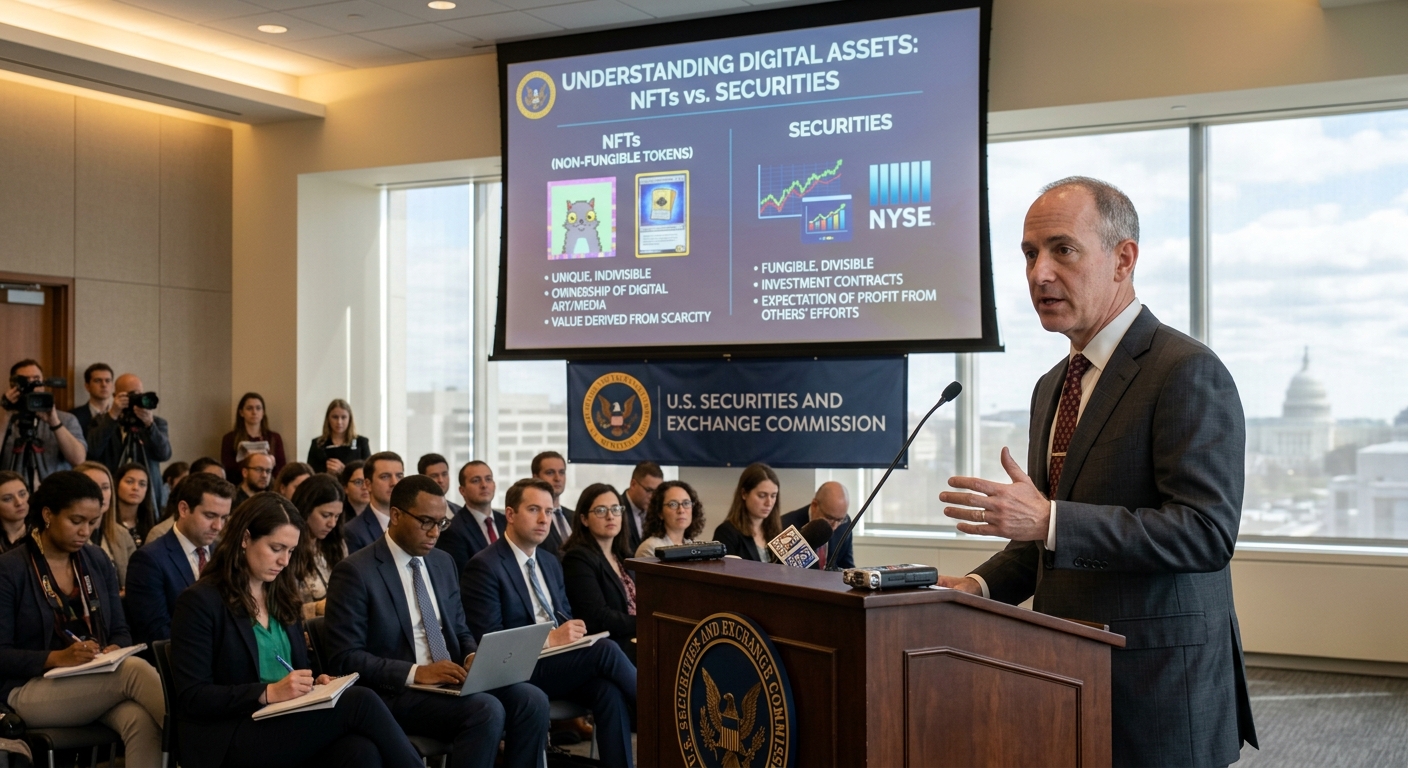
In a significant declaration regarding digital asset regulation, the U.S. Securities and Exchange Commission (SEC) has outlined its stance on nonfungible tokens (NFTs). Chair Paul Atkins has elaborated on why these digital collectibles generally do not meet the criteria to be classified as securities. This clarification is particularly important at a time when the cryptocurrency landscape is rapidly evolving and regulatory frameworks are struggling to keep pace with innovation.
Understanding how NFTs fit within regulatory frameworks has implications not only for creators and investors but also for the broader digital economy. As more individuals and businesses take an interest in NFTs, clearly defined regulations are essential in ensuring both market stability and consumer protection.
The Core of SEC’s Classification
During a recent interview with CNBC, Atkins discussed how the SEC’s recent interpretive release identifies broad categories of digital assets, including digital commodities, digital tools, stablecoins, and of course, digital collectibles like NFTs. He underscored that the SEC’s analysis is highly nuanced, depending on the specific facts and circumstances surrounding each asset. This includes considerations of whether an asset functions as an investment contract, which is the defining feature of securities.
Atkins defended the idea that many digital collectibles are more akin to physical objects collected for enjoyment rather than financial gambles. He likened purchasing NFTs to acquiring a baseball card or a meme—both of which are primarily seen as collectibles rather than investment vehicles. This perspective sets the foundation for how regulators can approach the complex ecosystem of digital assets without stifling innovation or exciting developments in the space.
Implications and Future Directions
The SEC’s pivot under Atkins symbolizes a notable departure from its previous regulatory heavy-handedness and toward a framework that seeks to encourage digital innovation. By addressing the failings of “regulation through enforcement,” the SEC aims to establish a clearer and more predictable environment for blockchain technologies and cryptocurrencies. This shift is especially vital given the rapid advancements in the sector, which have left the United States arguably lagging behind in global crypto adoption.
This recalibrated focus promises to open up discussions on how best to support digital innovation while ensuring adequate consumer protections are in place. Industries reliant on NFTs and other digital assets may find themselves in a more favorable regulatory climate, but the question remains: will this new approach foster sustainable growth without compromising the integrity of the financial markets?
In conclusion, as the SEC refines its stance on NFTs and other digital assets, it raises several questions for the future: How will the SEC’s new regulatory framework affect the development and adoption of NFTs? What measures can be implemented to ensure that innovation flourishes while safeguarding investors? And how will these discussions shape the landscape of digital assets in the coming years?
Editorial content by Finley Adams
