






Highlights
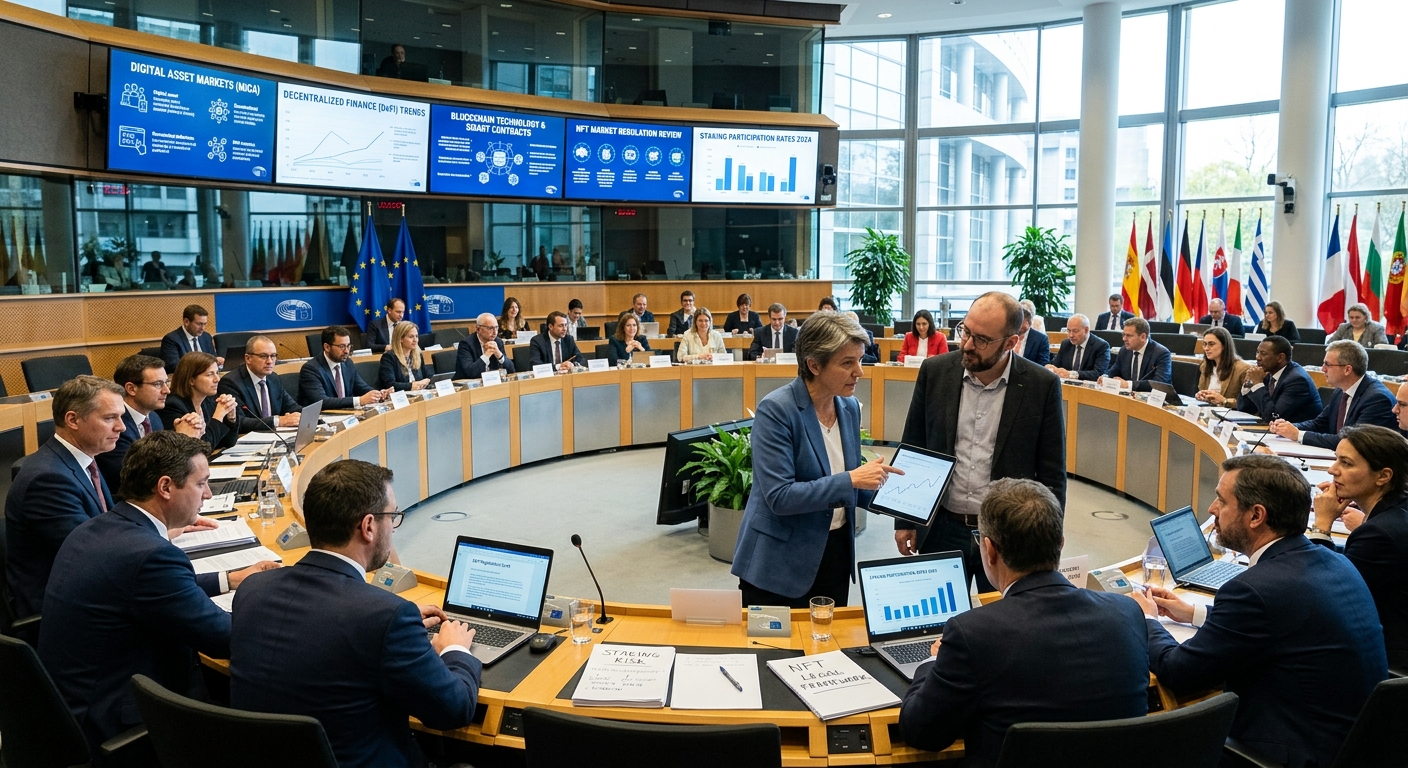
- The European Parliament’s Economic Affairs Committee is pushing for the regulation of various crypto assets including lending, borrowing, and NFTs.
- The report advocates for euro-denominated stablecoins to bolster the EU’s financial ecosystem and encourages the development of tokenized assets.
- Legislation under the Markets in Crypto-Assets Regulation (MiCA) is currently under review, with potential expansions to cover DeFi and other areas in the pipeline.
Setting the Stage for Crypto Regulations
In a noteworthy move that reflects the evolving landscape of digital finance, the European Parliament’s Economic Affairs Committee has called upon the European Commission to evaluate potential regulations surrounding cryptocurrency lending, borrowing, staking, non-fungible tokens (NFTs), and decentralized finance (DeFi). This push is part of a broader discourse on how to adequately oversee these rapidly developing sectors within the financial ecosystem. By proactively addressing these elements, policymakers hope to safeguard consumers and stabilize the market.
The recommendation comes on the heels of a report set for plenary vote, emphasizing that regulating these facets could align with a comprehensive strategy under the Markets in Crypto-Assets Regulation (MiCA). This invites crucial scrutiny into how digital assets are treated within EU member states, enhancing legal clarity and operational consistency while fostering innovation in the space.
Exploring the Core Obligations
The report, drafted by Belgian MEP Johan Van Overtveldt, signifies a shift in perspective on stablecoins, particularly euro-denominated ones, which have gained traction as critical tools for modern payment systems. As recent instability in the banking sector highlighted risks related to stablecoins, including the USDC peg crisis triggered by reliance on traditional banks, lawmakers are now more inclined to view these digital assets as beneficial components of the monetary landscape rather than potential threats.
The committee’s discussions underscore the potential for euro-denominated stablecoins to enhance market efficiency and contribute positively to the overall competitiveness of the EU’s financial framework. The development of stablecoins could also support faster and less costly cross-border transactions, aligning with the EU’s objective to streamline and modernize its payment systems. This sentiment is echoed in the committee’s endorsement of integrating digital currencies alongside traditional monetary practices.
Looking Towards the Future of Crypto Regulation
The path forward for MiCA and its regulatory perimeter is far from settled. Van Overtveldt’s earlier drafts focused primarily on adjusting existing frameworks, but the approved report now paves the way for a broader conversation about digital asset regulation across the EU. Lawmakers are advocating for its consistent application to prevent fragmentation in the industry, which could stifle innovation and harm businesses operating across borders.
As the European Commission reviews MiCA, areas such as decentralized finance, NFTs, and other crypto-related activities will likely come under the microscope. This expanded focus suggests a potential paradigm shift in regulatory approaches, moving from a reactive to a proactive stance—one that seeks to encompass more of the rapidly evolving digital asset landscape. With a transitional period for current crypto service providers ending soon, the urgency for cohesive regulation could not be more critical.
In conclusion, the European Parliament’s call for enhanced scrutiny into crypto assets marks a significant step towards shaping the future landscape of digital finance in the EU. As these discussions unfold, what implications do you think these regulatory measures will have on innovation in the crypto space? How might this affect the broader adoption of cryptocurrencies across Europe? Would a regulatory framework ease or hinder public trust in digital assets?
Editorial content by Harper Smith
