





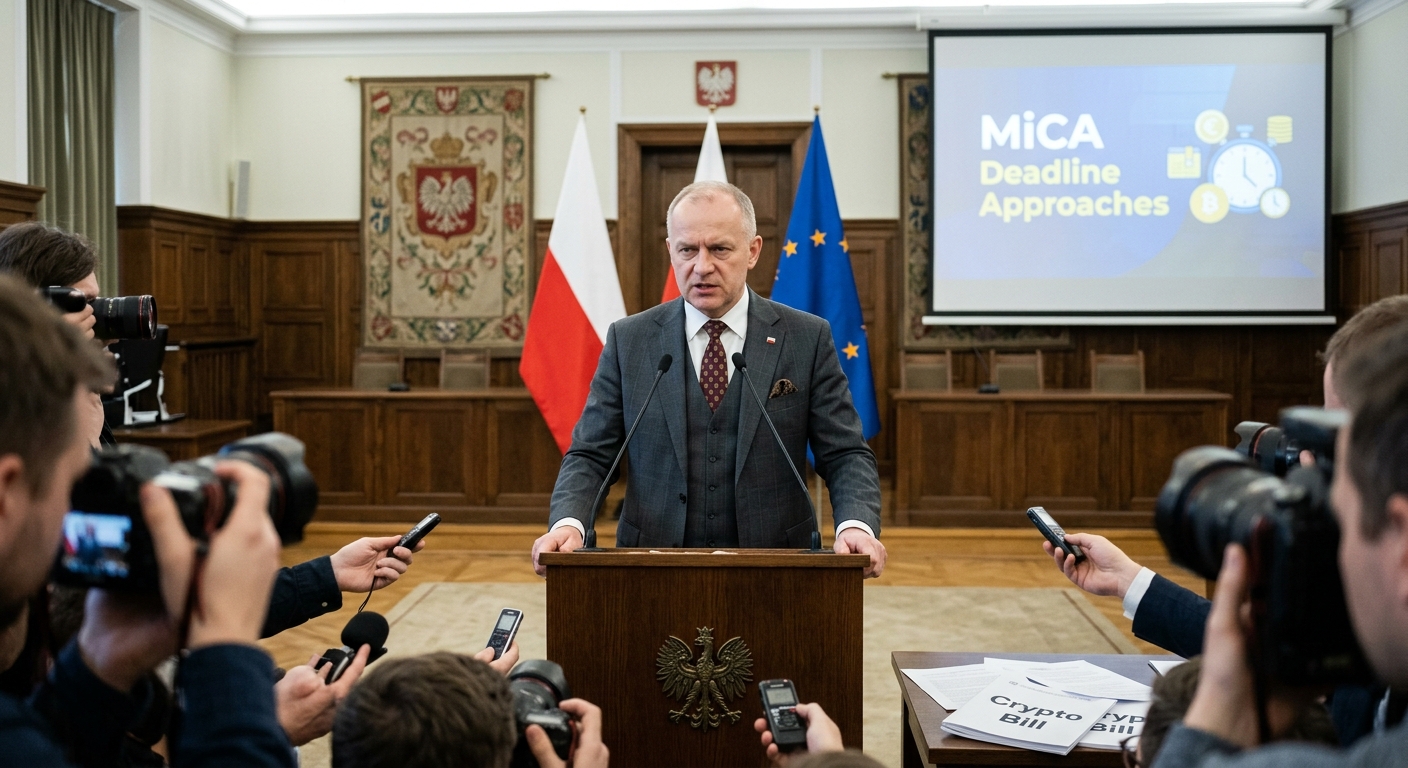

- Polish President Karol Nawrocki has vetoed a cryptocurrency regulatory bill for the third time, delaying Poland’s adherence to the EU’s Markets in Crypto Assets Regulation (MiCA).
- The latest veto has sparked outrage from government officials, including Prime Minister Donald Tusk, amid concerns over crypto oversight in Poland.
- With the July 1 deadline looming for MiCA compliance, Poland’s crypto service providers risk losing their ability to legally operate in the EU if the standoff continues.
Poland’s Crypto Regulation Standoff
In a significant move that rattled the cryptocurrency landscape, Polish President Karol Nawrocki has issued his third veto of a regulatory bill aimed at implementing the European Union’s Markets in Crypto Assets Regulation (MiCA). This pivotal regulation was intended to provide a comprehensive framework for the cryptocurrency sector across Europe. The absence of a compatible regulatory format in Poland not only highlights the country’s hesitation to align with the wider EU regulatory landscape but also raises questions about the future of local cryptocurrency businesses.
The president’s refusal stems from his assertion that the government failed to adequately incorporate key amendments he had proposed, with only one of the 16 changes being accepted. This continued political discord signifies a deeper struggle within Polish governance about how to properly oversee cryptocurrencies, a sector growing rapidly in both complexity and significance.
The Core of the Controversy
The implications of Nawrocki’s veto extend beyond mere delays in policy implementation. With the end of MiCA’s transitional period set for July 1, Poland stands out as the only EU member state yet to implement these regulations. Consequently, Polish crypto asset service providers without a MiCA license may be forced to cease operations in the EU, placing them at a competitive disadvantage as other nations advance in regulatory clarity.
Moreover, the political impasse has incited criticism from various stakeholders, including Prime Minister Donald Tusk, who expressed his disbelief at the president’s repeated vetoes. The Prime Minister’s remarks underline a growing impatience within the government to tackle the regulatory challenges head-on, especially as ongoing investigations into major exchanges like Zondacrypto raise the stakes for user protection and industry integrity.
Looking Ahead: The Need for Regulation
This situation illustrates not only the urgency of establishing a regulatory framework in Poland but also the potential risks businesses and consumers face in the current unregulated environment. Government officials have raised alarms over the possibility of fraud and exploitation in the crypto space, which has amplified calls for coherent regulation that prioritizes consumer protection while also fostering healthy market development.
As the deadline approaches, the pressure is mounting for Polish lawmakers to find common ground and reintroduce a modified bill that can adequately address the president’s concerns and lead to compliant legislation. The outcome of this prolonged standoff will likely influence not only the immediate future of Poland’s crypto ventures but may also serve as a cautionary tale for other nations grappling with similar issues.
In conclusion, Poland’s ongoing struggle to define its cryptocurrency regulatory framework reveals a complex interplay of governance, market dynamics, and consumer rights. As debates continue, one must consider: How will this ongoing situation affect the trust of consumers in crypto markets? What alternative approaches might Poland take to break the current stalemate? And could this experience shape the future of crypto regulation in Europe at large?
Editorial content by Quinn Taylor
