






Highlights
- The U.S. Senate’s crypto market structure bill faces significant delays and risks not passing before the midterm elections.
- Congressional negotiations have highlighted bipartisan concerns over provisions related to stablecoins and regulatory clarity for crypto assets.
- The outcome of the bill could fundamentally change the landscape for institutional investment in cryptocurrencies, urging lawmakers to decide swiftly.
A Crucial Legislative Moment for Crypto
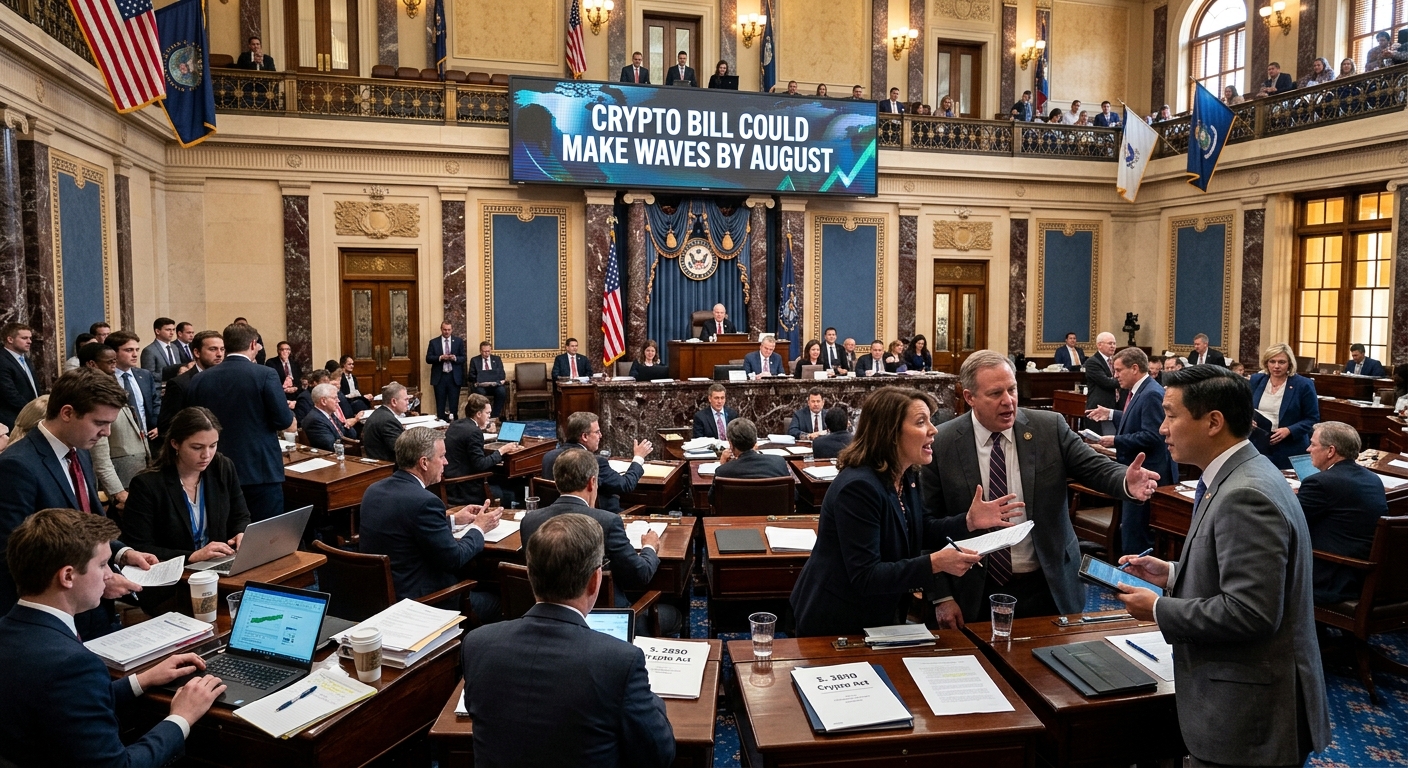
In a pivotal moment for the cryptocurrency industry, the U.S. Senate is grappling with a highly anticipated crypto market structure bill that could reshape how digital assets are regulated in the country. Pushed by the urgency of upcoming midterm elections, lawmakers are acutely aware that time is of the essence if they wish to enact meaningful reform. Financial experts, including Greg Cipolaro from NYDIG, have conveyed that thorough discussions and approval processes could extend well into August, with the looming risk of the bill stalling indefinitely.
The bill, touted as one of the most significant pieces of crypto legislation for 2023, outlines the guidelines that would enable U.S. regulatory bodies to oversee cryptocurrency markets more effectively. However, its journey has been anything but straightforward, encountering numerous delays as lawmakers wrestle with controversial topics like stablecoins and the use of cryptocurrencies by government officials. The urgency surrounding this bill not only affects the technological landscape but also the broader financial stability and investment confidence in the rapidly evolving crypto industry.
Key Challenges and Deliberations
The Senate Banking Committee has made some progress by passing the bill through a long-overdue markup. However, substantial hurdles remain on the Senate floor, where it requires 60 votes to expedite the process and bypass prolonged debates. In this challenging political climate, the Republican majority must garner support from at least seven Democrats, who are expressing skepticism about provisions they believe fall short in terms of security and the prevention of financial crimes.
With the Senate’s summer recess approaching and the political climate heating ahead of the November midterms, the bill’s future is precarious. Should it fail to pass before Congress adjourns, future opportunities to revisit the legislation may be limited, particularly if the political balance shifts. Cipolaro posits that if a Democratic majority takes control, the current Republican-backed version of the bill may not survive the next Congress, indicating a crucial legislative period for proponents of crypto clarity.
The Stakes for the Crypto Market
If the bill ultimately becomes law, it is anticipated to provide much-needed legal clarity for cryptocurrency markets, potentially encouraging institutional investment by reducing regulatory ambiguities. Notably, it would categorize Bitcoin as a commodity under the auspices of the Commodity Futures Trading Commission, a move that could solidify its status as a legitimate asset class. Experts believe this shift would catalyze significant confidence from major financial entities looking to venture into the crypto space.
However, the potential for failure looms large. Stalled negotiations over specifics—particularly around ethics in finance and decentralized finance enforcement—could derifle the bill’s prospects. Should these discussions continue to drag, the crypto sector may find itself in an extended state of “permanent jurisdictional ambiguity,” stifling growth and innovation. Proponents urge stakeholders to act decisively—navigating the current landscape efficiently could preserve the ongoing development of digital currencies.
In conclusion, the outcome of the Senate’s crypto market structure bill remains uncertain but undeniably essential for the future of cryptocurrency regulation in the U.S. As lawmakers continue their negotiations, key questions arise: How might the impending midterm elections affect the bill’s viability? What provisions are critical for balancing innovation with regulatory oversight? And how will the crypto industry adapt if the bill fails to pass this session? The answers to these questions will shape the future of the crypto market as we know it.
Editorial content by Quinn Taylor
