





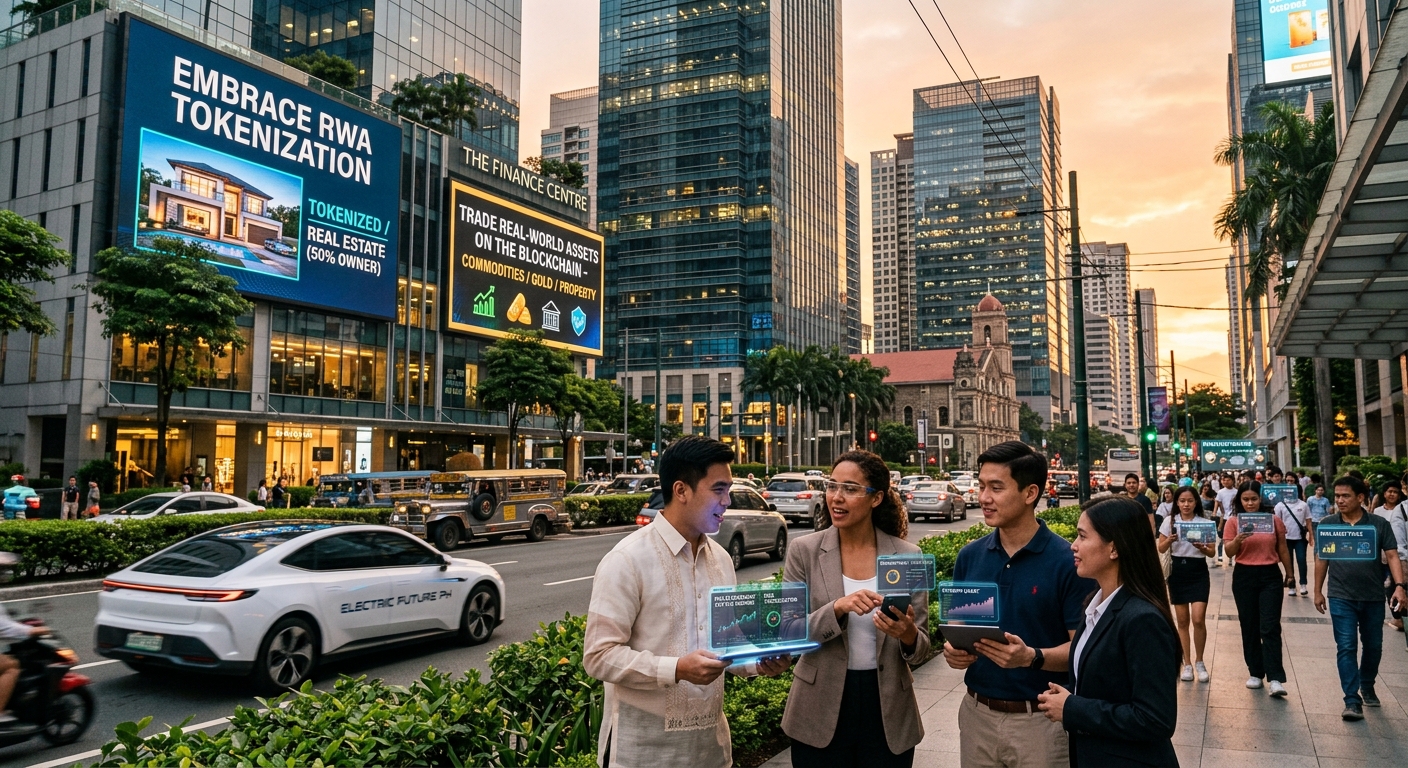

Highlights:
– The Philippine SEC is now poised to embrace the tokenization of real-world assets, signifying a pivotal step in financial innovation.
– This initiative aims to provide overseas Filipino workers with legitimate investment opportunities and protect them from scams.
– The SEC’s Strategic Sandbox allows fintech companies to pilot tokenized assets within a regulated environment, promoting both innovation and investor safety.
Tokenization of Real-World Assets: A New Era for the Philippines
The Philippine financial landscape is on the brink of transformation as the Securities and Exchange Commission (SEC) has announced its readiness to accept the tokenization of real-world assets (RWAs). This development emerged prominently during the Philippine Blockchain Week 2026 when SEC Commissioner Rogelio Quevedo expressed confidence in the country’s legal framework and regulatory capabilities to embrace this innovative technology. The advent of asset tokenization is expected to foster significant advancements in capital markets, potentially revolutionizing how stock exchanges operate.
Tokenization holds immense significance, particularly for overseas Filipino workers (OFWs), who are often seeking safer investment avenues for their hard-earned money. Quevedo highlighted that many OFWs possess capital but lack guidance on where to invest, making them targets for investment scams. With the SEC’s support, tokenized products may offer legitimate investment options that empower these workers while ensuring their financial safety.
Emerging Opportunities and Regulatory Framework
The SEC’s commitment to exploring tokenized assets is reflected in its Strategic Sandbox initiative, which provides a controlled environment for fintech companies to trial innovative products under regulatory supervision. This sandbox framework allows the SEC the flexibility to waive certain legal requirements, enabling participants to test their business models without bending or breaking existing laws. However, it is crucial to note that this does not exempt these companies from compliance altogether, ensuring that all new ventures adhere to fundamental regulations.
Since the launch of the StratBox, several companies have been granted access to explore tokenized offerings. Notably, one company is testing a tokenized real estate asset, while others have focused on facilitating access to U.S. equities. Additionally, BlockShoals Technologies has received preliminary approval to explore crypto-related products and services, indicating a growing interest in crypto technologies within the regulatory framework.
Ensuring Investor Protection and Future Prospects
The SEC’s proactive stance on asset tokenization is not merely a push for innovation; it also serves as a crucial strategy for protecting investors, especially vulnerable populations like overseas workers. By leveraging advanced technologies, including artificial intelligence, the SEC aims to identify and combat investment scams actively. The collaboration with major online platforms such as Google and TikTok further underscores their commitment to eliminating illegal investment offerings from the market.
As asset tokenization takes root in the Philippines, it presents various implications for the broader financial ecosystem. The prospect of regulated digital assets could draw increased local and international investments, broaden access to financial services, and ultimately enhance overall market efficiency. However, authorities must tread carefully to strike a balance between innovation and the stringent upkeep of consumer protections.
In conclusion, the Philippine SEC’s emerging acceptance of tokenized real-world assets highlights a new frontier in capital markets, particularly for those seeking to make informed investment decisions. This development raises important questions: How can regulators ensure the security of these new financial products? What measures can be implemented to educate potential investors about the risks associated with tokenization? As the Philippines embarks on this transformative journey, the discourse around asset tokenization will be critical in shaping the future of its financial landscape.
Editorial content by Quinn Taylor
